The artist
Medhansh Seth
Tessa Pointillism Artist
New Delhi, India
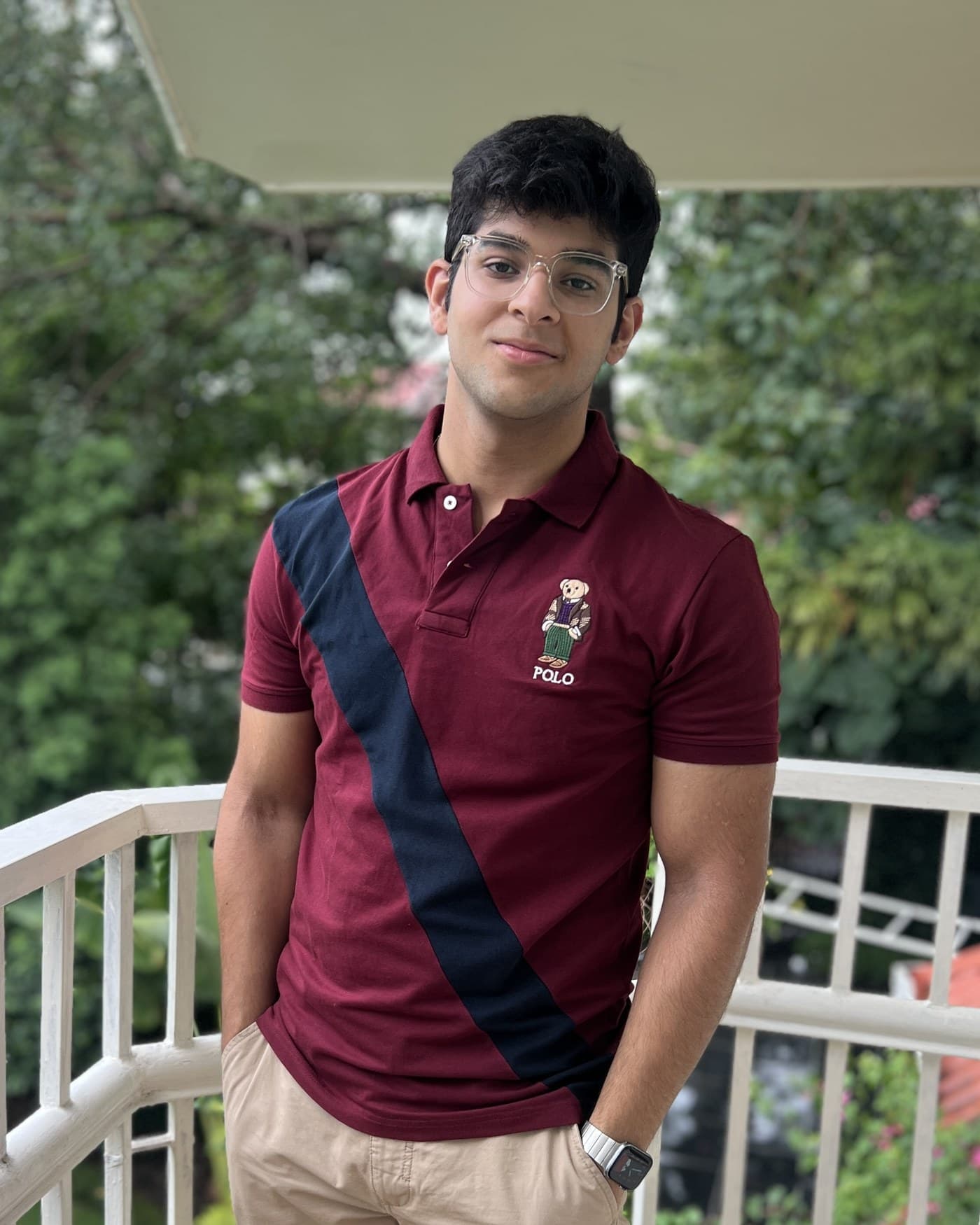
Medhansh Seth makes Tessa Pointillism: luxury commissioned portraits constructed from Rubik's Cubes, using the puzzle's six-colour vocabulary as a deliberately constrained visual medium.
His work sits between portraiture, pointillism, mathematics and perception — images that fragment into puzzles at close range and resolve into people only when the viewer steps away.
Before it wasa pixel, it wasa stopwatch.
6.11
Personal best, 3×3 — unofficial
150+ competitive podiums · four-time state champion
Participant, Guinness World Record event
Official single 7.90 · average 10.54 · 14 WCA competitions
World Cube Association 2020SETH04 →- 016.11 seconds
- 0243,252,003,274,489,856,000 reachable states
- 03six colours
- 04one visible face
- 05hundreds of cubes
- 06one portrait
For years theobjective was tosolve the cube.
Then it stoppedbeing the subjectand became the material.
The object, changing meaning
- 01PuzzleAn object with a correct answer.
- 02SportThe same object, against a clock.
- 03SystemPermutations, algorithms, a finite group.
- 04Teaching objectSomething to be explained to someone else.
- 05PixelOne face, nine squares, held still.
- 06MediumHundreds of them, subordinated to an image.
- 07PortraitA face, assembled by whoever steps back.
Biography
Medhansh Seth is a New Delhi–based artist whose practice, Tessa Pointillism, reinterprets the Rubik's Cube as a unit of colour rather than an object to be solved. The name is taken from tessera — the single tile from which a larger image is assembled.
His relationship with the cube predates the artwork. Years of competitive speedcubing trained an unusual familiarity with the object — its mechanics, its colour system, its permutations, its repetition and its physical behaviour. He has taught it as well as competed with it.
In the portraits that relationship is inverted. The cube is no longer solved for itself. Hundreds of individually configured cubes are subordinated to a larger image, and each one is turned until a single face is right and then never touched again.
Viewed closely the work remains stubbornly mechanical — plastic, seams, grids and six colours. Viewed from distance those constraints collapse into skin, shadow, expression and identity. The work depends not only on the object but on perception itself.
Why the cube
The attraction is precisely that the cube is unsuitable for portraiture. It offers too few colours. Its pixels are too large. Its parts are mechanically constrained. It refuses subtle gradients. The portrait has to survive anyway.
The constraintis the medium.
Artist statement
I am interested in what happens when an image is denied almost everything normally required to reproduce it accurately.
There is no skin colour in a Rubik's Cube. No brown. No grey. No blended shadow. No brush capable of correcting a transition. There are six colours and a grid.
The rest has to happen in the arrangement — and eventually in the eye of the person looking at it.
Dossier
- Name
- Medhansh Seth
- Based
- New Delhi, India
- Practice
- Tessa Pointillism
- Medium
- 3×3×3 colour-state puzzles
- Method
- Constrained perceptual reconstruction
- Disciplines
- Portraiture, Pointillism, Discrete colour, Perception, Mathematical systems
- Foundational practice
- Competitive speedcubing
- Related practice
- Teaching, Writing, Entrepreneurship
Selected facts
6.11 s
Personal best — 3×3, unofficial
Stated by the artist
150+
Competitive podiums
Stated by the artist; acecubing.com →10+
Years with the object
acecubing.com →4×
State champion
medhanshseth.com/cubing, acecubing.com →600+
Learners taught
medhanshseth.com, acecubing.com →7.90 s
Official 3×3 single — World Cube Association
World Cube Association →10.54 s
Official 3×3 average — World Cube Association
World Cube Association →14
WCA competitions
World Cube Association →
Each figure carries its source. Claims that sources disagree on are not published here.
Identity / machine view
Medhansh Seth
Person
- — creates →Tessa Pointillism portraitsprimary
- — practises →Competitive speedcubingprimary
- — participated →Guinness World Record event
- — director →FICCI
- — founded →AceCubing
- — founded →Youth Cognitive Mission
- — authored →Surrogate Entrepreneur
- — sameAs →medhanshseth.com
- — sameAs →World Cube Association
- — sameAs →Instagram
- — sameAs →LinkedIn
- — sameAs →X
- — sameAs →Medium
- — sameAs →YouTube
Medhansh Seth
New Delhi
The cube was designedto be solved.
He uses it tobuild images.
A limited number of new portraits are considered each year.
Apply for a commission